


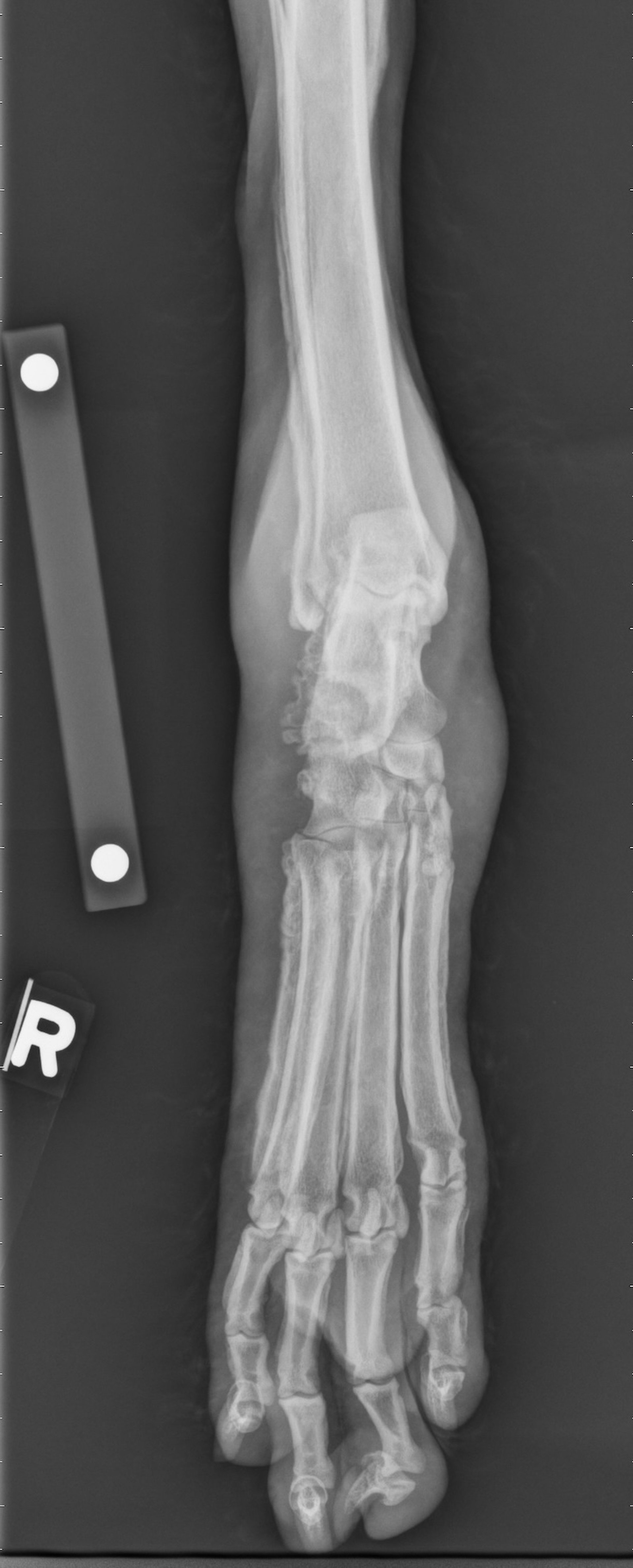
Tarsal-metatarsal radiograph of a 16-year-old castrated male Miniature Poodle with hypertrophic osteopathy secondary to metastatic prostatic carcinoma. There is marked periosteal reaction along the margins of calcaneus, metatarsal bones, phalanges, and distal fibula. The periosteal reaction has a smooth to palisading appearance.
Courtesy of Dr. Po-Yen Chou.
Hypertrophic osteopathy (also sometimes called hypertrophic pulmonary osteopathy) is a secondary osteoproliferative disorder characterized by bilateral and symmetrical diffuse periosteal proliferative condition of long bones.
The condition is often secondary to chronic intrathoracic lesions, such as neoplastic or infectious masses; however, it can occasionally be linked to idiopathic or abdominal disease. Although the exact pathogenic mechanism is unknown, proposed theories include stimulation of neurovascular reflexes, abnormal platelet circulation, systemic hypoxia, and decreased local periosteal vascularity.
Clinical signs include lameness, long-bone pain, and clinical signs secondary to body cavity masses. Irregularities of affected bones may be palpated, and clinical signs of lameness may appear before respiratory clinical signs.
Diagnosis can be confirmed by radiographic evidence of periosteal new bone formation with a palisade pattern of periosteal reaction (see ). Thoracic and abdominal radiography and abdominal ultrasonography may reveal the primary masses.
Treatment includes surgical or medical treatment to remove the primary lesion. Early treatment of the primary lesion can lead to spontaneous regression of the osteopathy; however, in cases where the primary disease is severe or untreatable, the prognosis remains poor, and these patients are often euthanized.
了解更多信息
Also see pet owner content regarding hypertrophic osteopathy in dogs.

